Wahlgreniella Hille Ris Lambers
This page updated: February 2026.
This is a genus name for a collection of very poorly understood aphids that occur across much of North America, Europe, and Asia. I have been pursuing Wahlgreniella for many years, hoping to accumulate enough material to determine how many species there are in western North America and to understand their life cycles. In early 2026 I decided to do such an analysis of my material. Find that essay here. Below I’ll share some general information about a few of the species covered in that essay. For all the details, pour yourself a cup of tea or coffee and have a look at my essay. I cannot comment on what Wahlgreniella species names are best used for the populations living in Europe. It seems likely that there have been introductions from North America and that there are native species there as well (e.g., Wahlgreniella vaccinii (Theobald)).
Wahlgreniella arbuti (Davidson)
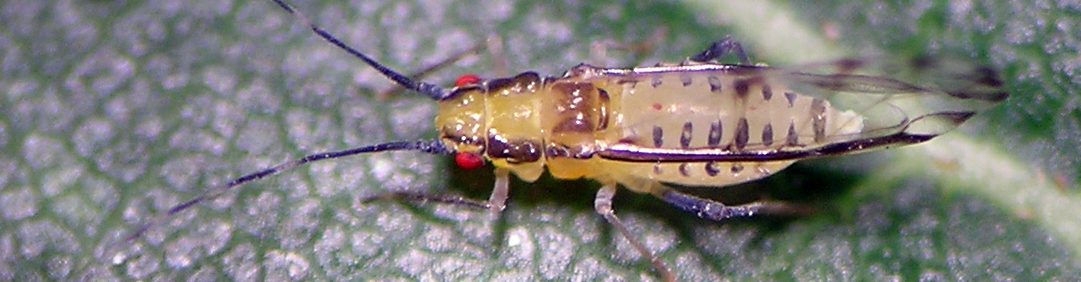
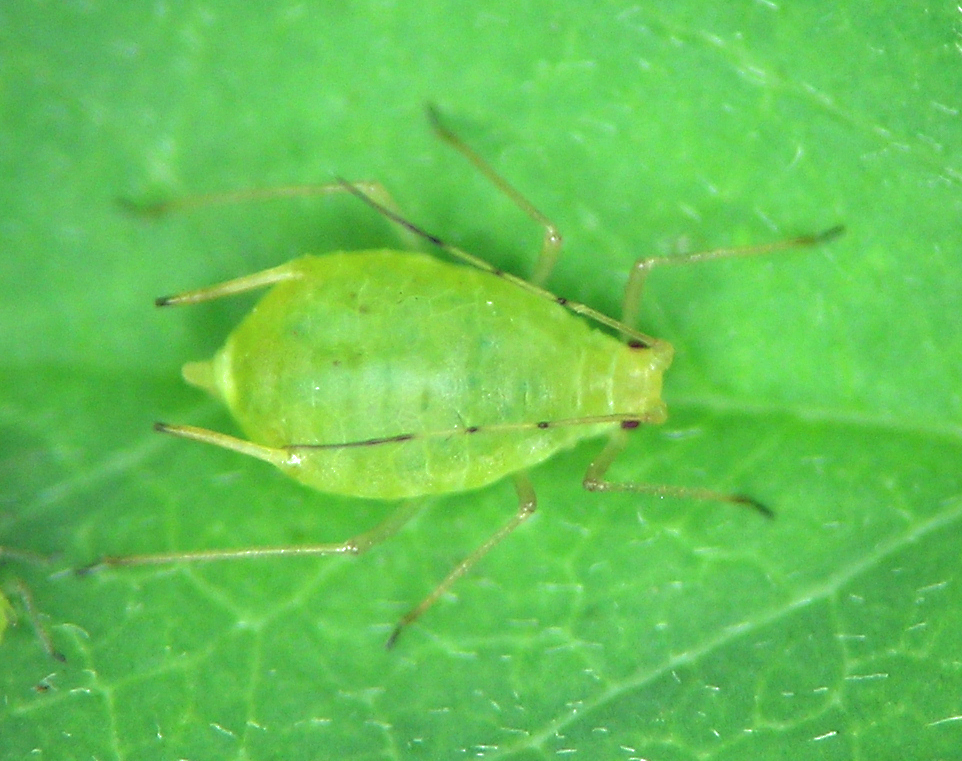
In my research on this genus in winter of 2026 I decided that the best name for the Wahlgreniella that lives on Rosa and various Ericaceae in western North America and has strongly clavate siphunculi and lightly spinulated head capsule is probably W. arbuti, described by Davidson in 1910. The hypothesis for many years has been that W. nervata migrates between Rosa as primary host and Arbutus (madrone; Ericaceae), Arctostaphylos (manzanita; Ericaceae), and possibly other Ericaceae. Upon evaluation of the early literature and my extensive material, I decided that the name W. nervata should apply to a form that feeds throughout the summer on roses, while the form that seems to migrate is a separate species and should be called W. arbuti.
Wahlgreniella janesi (Knowlton)
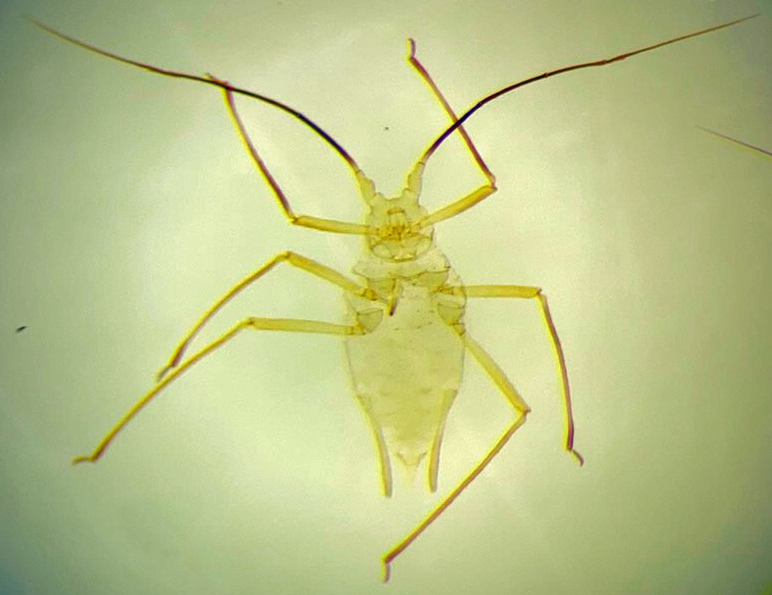
In my essay on this genus I did a thing that may be controversial: I guessed that this name, which for 50 years had been relegated to synonymy with W. nervata, applies to many samples of another species that lives on Fallugia paradoxa (Apache plume) in the southwestern states. It has black antennae, dark tibiae, and is strikingly different from the species on Rosa and Ericaceae.
Wahlgreniella nervata (Gillette)
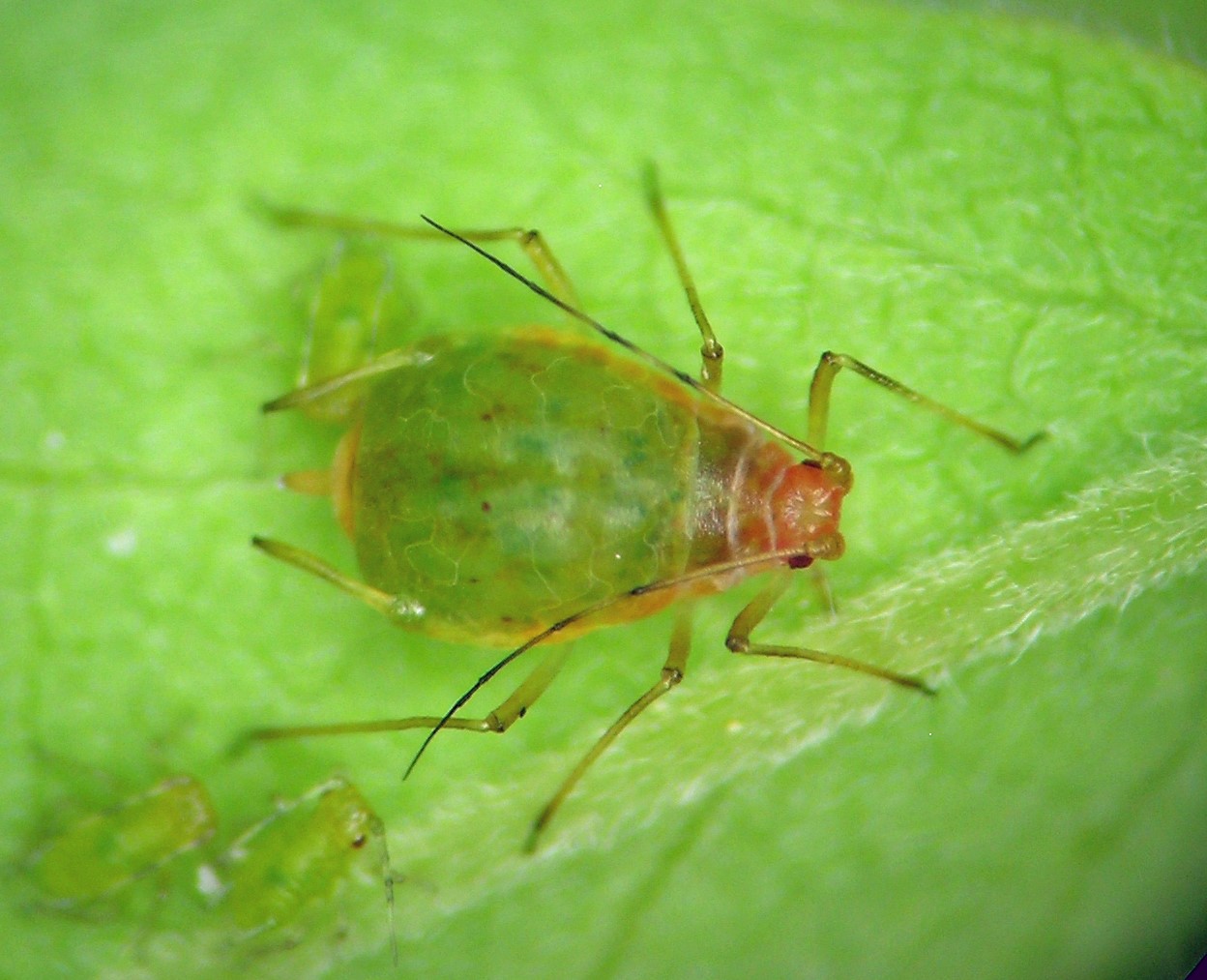
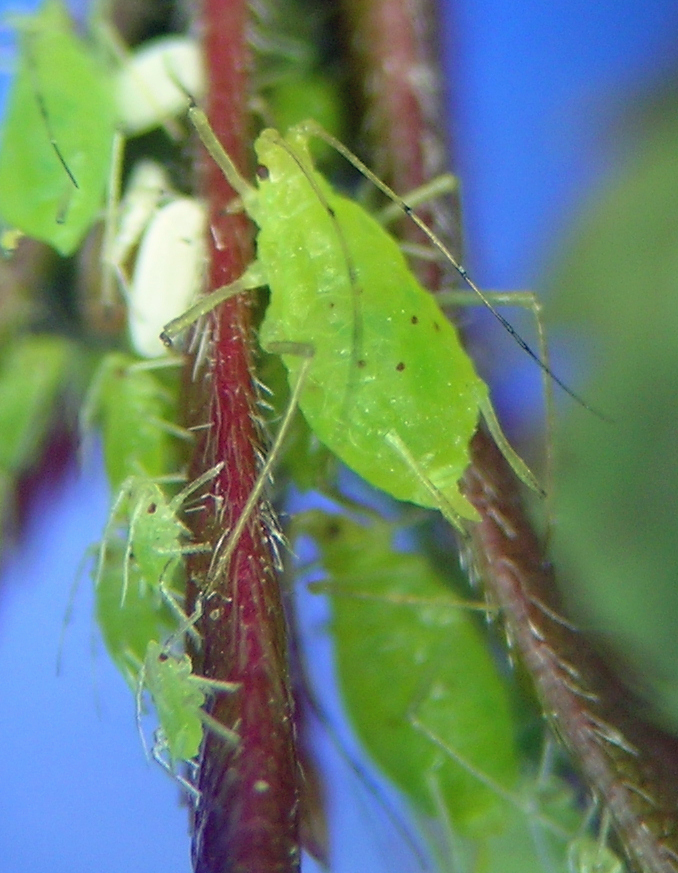
This species name has been used for many years for specimens found on roses across much of the world. In my Wahlgreniella essay of 2026 I propose a change to how we think of this name, applying it only to populations that have almost cylindrical siphunculi and that live on roses throughout the growing season. As you can read in my essay and at the top of this page, I think there is a separate species that feeds on both roses and Ericaceae in North America, and I use the name W. arbuti (Davidson) for it.
Wahlgreniella putative new species on Rosa stellata
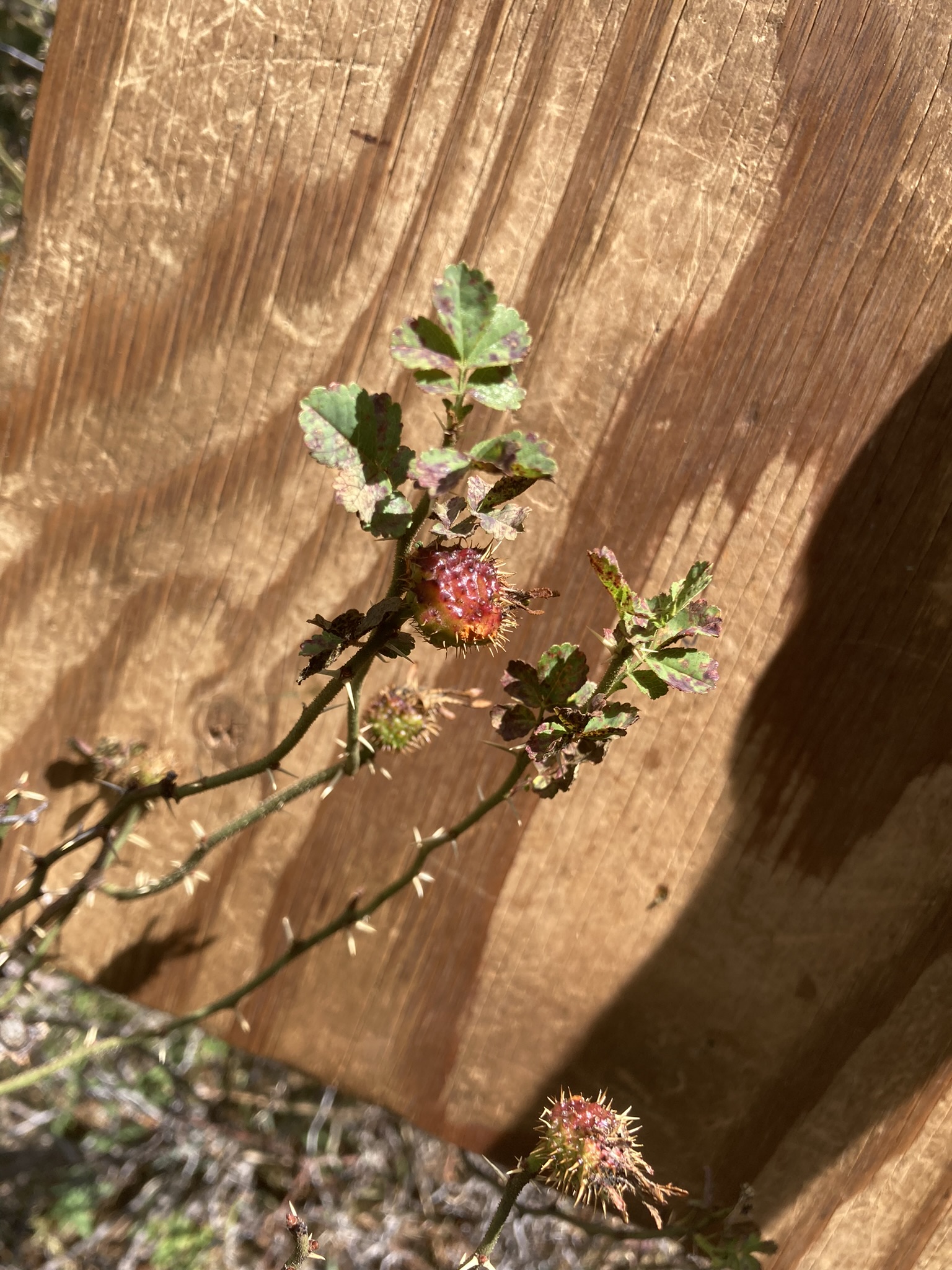
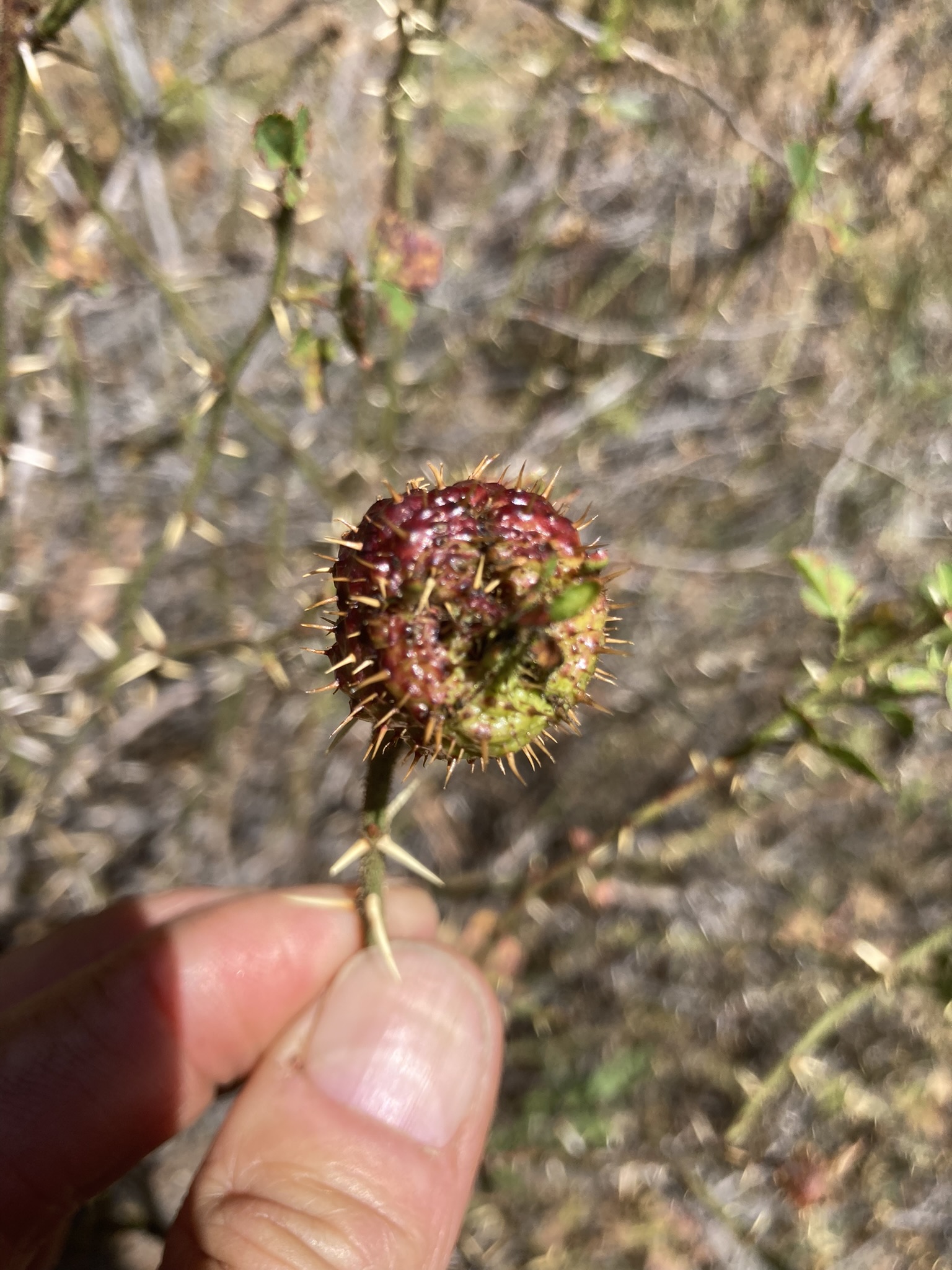
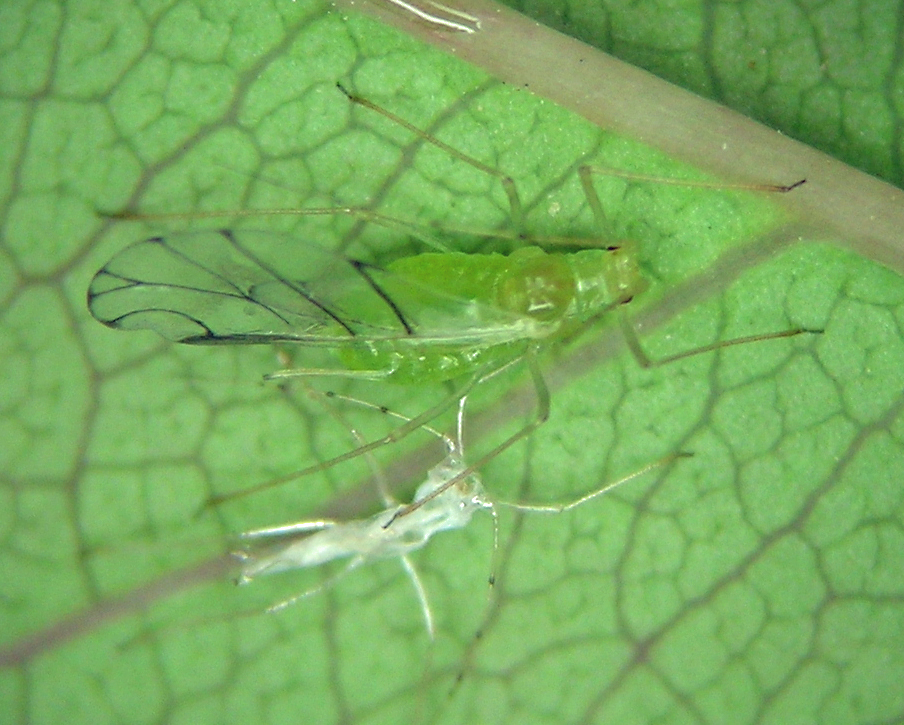
In September of 2014 I was collecting in the mountains of the Lincoln National Forest (New Mexico), and was walking through the mountain-top solar observatory site called Sunspot (about 2800 meters elevation), through a blowing fog. On the highest parts of the mountain grows a rose, with strange morphology, that I had never seen elsewhere and on it was a Wahlgreniella that looked different from anything I have seen before. Because of the enigma of this sample, I focused on finding this Wahlgreniella a second time during our 2023 visit to New Mexico. We camped not far from Sunspot in early October and took a day trip to visit the site. Alas, the parking area required a fee, and being misers we refused to pay it. So, we found a roadside pullout nearby and hiked back toward Sunspot through heavily grazed (cattle), abused and trashed (humans), and dry (climate change) forest land. About to lose hope, and right when I was going to suggest turning around, I spotted a stand of rose growing near some abandoned trash and car parts. These roses had almost no leaves but had the weird spiny stems and prickly hips I remembered from my 2014 visit. Tapping on these plants revealed surprisingly abundant Wahlgreniella looking just like I remembered. It turns out that the rose is Rosa stellata, a desert-inhabiting rose of New Mexico, Arizona, and Texas. Given the high elevation location of Sunspot, these plants were likely intentionally planted in the area or naturalized there due to accidental introduction. Presumably the aphid would be a found in the rose’s more typical habitat, but that is yet to be confirmed.